Blog

  • Frm. Assistant DA in Multnomah County: Measure 91 is the Right Choice for Oregon

    We need to get our priorities straight and end the waste of money and time.

    On a day-to-day basis county prosecutors see hundreds of cases and don’t have the resources we need to pursue them. Yet in Oregon, we have arrested or cited over 99,000 people for marijuana offenses over the last decade.

    Every minute spent on a marijuana case, is time taken away from more serious and violent crime. Should this be what law enforcement spends its time doing when there are untested rape kids, unsolved murders and missing children?

    Measure 91 will free up law enforcement resources to go after dangerous criminals and raise revenue for state and local police.

    We need to stop ruining people’s lives.

    When we prosecute people for non-violent marijuana offenses, we put them through the harsh reality of the justice system and only turn them into more hardened criminals. It gives them a record that follows them for the rest of their lives.

    This system doesn’t reduce marijuana use, protect children or make our streets safer. It just emboldens black market drug dealers and lines the pockets of organized crime and drug cartels in our state.

    Criminal enforcement is an unfair, unjust burden on communities of color.

    A black person is 100% more likely to be arrested or cited for marijuana related crimes than a white person in Oregon. That is despite nearly equal use across all communities.

    In some counties, like Lane, it is even worse. A black person is 3.5x as likely as a white person to be busted. This kind of disparity leads to erosion of trust between citizens and the police force and undermines the rule of law.

    Measure 91 would remove these harsh punishments and move us toward a more just society.

    Measure 91 is a better approach.

    Measure 91 keeps current DUI laws. Law enforcement officers will continue to pursue anyone driving impaired for any reason, using our current, effective field sobriety tests. Tax revenue raised by Measure 91 will go to hire more state troopers to keep our roads safe and provide specialized training for more officers to perform advanced roadside tests that can determine impairment.

    I’ve read Measure 91 and it includes the right restrictions. It’s system of regulated, legalized and taxed marijuana in Oregon means:

    • Better law enforcement priorities to keep us safer;
    • Shrinking the black market and drug cartels;
    • Funding for proven drug education and prevention programs for young people;
    • Raising much-needed tax money for schools and police.

    Please join me by voting Yes on Measure 91

    Darian Stanford
    Former Assistant District Attorney Multnomah County District Attorney’s Office Drug Unit


  • Travel as a Political Act with Rick Steves

    Rick Steves Books a New Kind of Tour: One to End Marijuana Prohibition in Oregon

    By Jill Harris

    Rick Steves Book CoverGuidebook author and TV host Rick Steves has traveled the world for three decades with an appetite for more than just new foods and cultures. He’s also had a keen interest in understanding how different countries address similar problems. As he notes in his book, “Travel as a Political Act,” one particularly serious issue he’s had his eye on is drugs. In part, “learning why Europe has fewer drug-related deaths, less drug-related incarceration, and less drug consumption per capita than we do here in America.”

    In a recent op-ed for The Oregonian, Steves summarizes his findings regarding marijuana:

    “When it comes to marijuana, some societies simply moralize and criminalize. Others are more pragmatic and work to reduce harm by taking the crime out of the equation, treating marijuana as a health and education issue instead…And it’s clear to me, we need to end our nation’s prohibition against marijuana.”

    Based on his experiences, Steves has been a longtime proponent of marijuana reform and was one of the original sponsors of Washington’s historic marijuana legalization Initiative 502, overwhelmingly adopted by voters two years ago. Rick aggressively campaigned for the initiative’s passage, arguing that his travels across the world confirm that marijuana is most effectively controlled through regulation. “Like most of Europe,” he said “I believe marijuana is a soft drug (like alcohol and tobacco), not a hard drug. Like alcohol and tobacco, there is no reason why it shouldn’t be taxed and regulated.”
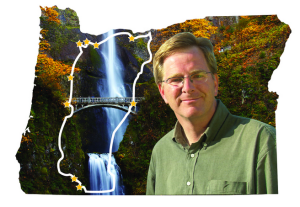
    Screen Shot 2014-09-24 at 12.45.04 PMDuring the month of October, he’ll be using travel as a political act once again during a 6-day, 10-city tour of the state of Oregon to promote Measure 91, which would create a regulated system that would refocus police time on serious crimes, hobble the black market cartels, and direct millions of dollars to education, drug treatment and prevention, and law enforcement.

    As in other states and nations, in Oregon, the failed approach to marijuana has come at a steep cost:

    There have been at least 12,000 arrests and citations for marijuana each year across Oregon counties – and the number goes up every year. Over the last decade, police have arrested or cited over 99,000 people in Oregon for marijuana offenses. The millions of dollars this costs every year comes at a time when Oregon has untested rape kits, missing children and unsolved murders.

    The current failed approach to marijuana in Oregon supports a dangerous system of drug cartels, drug dealers and organized YesOn91-Cartelcriminals that take in huge amounts of profits without paying a penny in taxes.
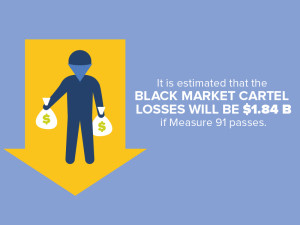
    These criminals grow marijuana illegally on Oregon’s public lands and other delicate natural habitat, at with highly negative and lasting environmental impacts.

    Current marijuana policy in Oregon does nothing to protect children. Drug dealers control kids’ access to marijuana, and they don’t ask for ID. And drug education and prevention programs are woefully underfunded.

    Watch below as Steves narrates an animated video that explains in more detail how the current system is failing Oregon:

    Measure 91 is a smart law designed to address this reality and it was carefully crafted to create a tightly regulated system that controls marijuana’s production, sales and use – taking the best lessons from Washington and Colorado’s laws and improving on them. It’s been endorsed by Richard Harris (one of the state’s top drug treatment and addiction experts), former U.S. Attorney Kris Olson, retired Supreme Court Justice Bill Riggs, labor groups, environmental groups, senior citizen organizations, The Oregonian, The Eugene Register-Guard, The East Oregonian and more — an impressive list of well-respected leaders.

    “There are so many reasons to end the prohibition on marijuana,” says Steves. “Whether you want to improve the well-being of children, redirect money away from criminals and into tax revenue for the state or protect civil liberties, it’s clearly time for a new approach. Rather than being ‘hard on drugs’ or ‘soft on drugs,’ by passing Measure 91, Oregon can finally be smart about drugs.”

    If you’re in Oregon, check out the dates and locations of Steves’ tour and come listen to him share what he’s learned through his travels, why this experience makes him concerned about Oregon’s current approach to marijuana, the track records thus far of both Washington state and other countries, and where the drug reform movement is heading.

    Learn more at www.VoteYESon91.com/RickSteves.

    Jill Harris is the managing director of strategic initiatives for the Drug Policy Alliance.


  • Search Results for: {search_term}

    RT @KyleHD: My story with @RickSteves and #Measure91 http://t.co/xwPlyA6VF9

  • Myth: Oregon police time and resources aren’t spent on marijuana offenses.

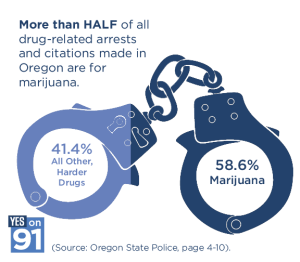
    MythvsFactHandcuffsMyth: Most of the statistics of marijuana “arrests and citations” are simple citations. They are like speeding or not signaling the right way. They take very little resources.

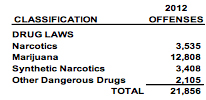
    Reality: More than half of the drug-related arrests and citations made in Oregon are for marijuana. (Source: Oregon State Police, page 4-10). In 2012, the most recent year for which data is available, 21,856 people were arrested or cited for drug crimes, and 12,808 of them were for marijuana.

    Marijuana-related policing has a huge cost. Police time is required to search, arrest, book, issue a ticket or lock someone up. In addition to the financial cost, every marijuana arrest and citation takes time that a police officer could have used patrolling a neighborhood, preventing an assault or solving a violent crime. Then there’s also the cost to the individuals, who will now have a marijuana crime on their records and may have trouble finding a job. Treating adult marijuana use as a crime is a drain on our resources.


  • Notes from the Road: Legalizing Marijuana in Oregon by Rick Steves

    Travel as a Political Act: Tour of Oregon so far

    By Rick Steves

    Grand Theater, Salem

    Last night, I had the privilege of speaking to about 300 people in downtown Salem at the Grand Theater. Just a few blocks from the Oregon capitol building. I was introduced by Sammy Basu, a professor of politics at Willamette University. It was a thrilling talk. It is always exciting to share my perspective and the stories of my travels and how it relates to drug policy in the United States, but even more thrilling because of the questions that came from the audience at the end.

    There was a former prosecutor in the audience who shared his personal experience with the imbalance of our justice system when it comes to even small crimes. When a poor kid and wealthy kid are arrested for marijuana the outcomes are vastly different. The wealthy kid has parents who can help him navigate the system, ensure that he dresses nicely for court appearances, pay for a lawyer, and help translate the complexities of the legal system. A poor kid may not even have a ride to court, let alone a lawyer to help them through the legal process.

    Treating marijuana as a crime has failed and it’s failing our kids, it’s setting young people back early in their lives, leaving them behind for the rest of their lives. This is true in cities across Oregon just like Salem, and in my home state of Washington. More than 13,000 people were arrested or cited in Oregon last year for marijuana; the war on drugs isn’t working.

    Packed house for Rick Steves in Salem

    Inconsistent enforcement of a law erodes respect for law enforcement and for the legal process. Let’s stop wasting police resources and refocus their efforts on serious and violent crimes and vote YES on Measure 91. Marijuana use is a serious, expensive and persistent challenge in our society. And it’s time for a new approach. That’s why I co-sponsored the initiative that legalized the responsible adult use of marijuana in Washington state two years ago.

    Now, with first hand knowledge of what’s happened in Colorado and Washington after they passed their laws taxing, regulating and legalizing the responsible adult use of marijuana, we can say it is going well. The Brookings Institute issued a study on how things are progressing. They reported that the fears regarding increased teen use, DUIs, and crime are not materializing and, on balance, taking the crime out of the equation is looking like a smart move.

    There are so many reasons to end the prohibition on marijuana. Whether you want to improve the well-being of children, redirect money away from criminals and into tax revenue for the state or protect civil liberties, it’s clearly time for a better approach. Rather than being “hard on drugs” or “soft on drugs,” by passing Measure 91, Oregon can finally be smart about drugs. Please vote yes.

    Our stop in Beaverton was a standing-room only affair. What an enjoyable way to spend a lunch hour. Check out this short video on my visit:

    Rick Steves lives in the Seattle area, writes European travel guidebooks, and hosts travel shows on public television and public radio.


  • Myth: Treating marijuana use as a crime doesn’t lead to violence in Oregon.

    Myth:

    Treating marijuana use as a crime doesn’t lead to violence in Oregon.

    Reality:

    It does leads to violence. The Oregonian investigated this thoroughly in a six-part series of stories that, according to the Pulitzer Prize judges, “revealed how lethal Mexican drug cartels infiltrated Oregon and other regions of the country.” For a good overview on how these cartels operate, read more here.

    Treating marijuana use as a crime brings money to the black market and fuels violence.


  • Myth: We have only six people behind bars for marijuana use in Oregon.

    Myth:

    We have only six people behind bars for marijuana use in Oregon.

    Reality:

    That’s off by a factor of 29. According to the the Oregon Department of Corrections, the number of people behind bars for marijuana as of this writing is 174. This number only applies to people in state prison, not people in federal prison or county jail.

    The Department of Corrections does not specifically provide data online about the number of people behind bars for marijuana. We got this information in response to a records request to the Oregon Department of Corrections.

    Locking a person up behind bars in Oregon costs taxpayers about $30,000 a year. Lots of people are behind bars for marijuana use in Oregon, and it’s a waste of our money. Learn about the initiative to legalize and regulate to save taxpayer money.


  • Myth: Regulating, legalizing and taxing marijuana will lead to more people “dying on the highways.”

    Reality:

    Measure 91 does not change current DUI laws. In fact, since legalizing adult recreational use of marijuana, Colorado’s highways are getting safer. Fatalities are down in 2014 from the same point in 2013. Highway fatalities are occurring at a 48% less rate than they were in 2002.

    (Source: Colorado Department of Transportation, 2014 statistics so far, 2013 statistics and historical trends.)


  • Myth: Oregon can’t expect the same law enforcement savings as Colorado.

    Myth:

    Although Colorado saved $12m-$40m in law enforcement savings after legalization, Oregon can’t expect the same because our laws are more lenient.

    Reality:

    Colorado’s laws were actually more lenient than Oregon’s, which suggests that law enforcement in Oregon would save even more money than law enforcement saved in Colorado.

    Before Colorado passed their Amendment 64 — the measure to regulate, legalize and tax marijuana in that state — possession of less than one ounce of marijuana was punishable by a maximum fine of only $100. (Source: Colorado Revised Statutes prior to November 6, 2012 at 18-18-40 on page 35.)

    In Oregon, possessing less than one ounce of marijuana is a criminal infraction and a $650 fine. Regulating, legalizing and taxing marijuana in Oregon will save Oregon law enforcement money.


  • Myth: We Don’t Arrest People for Marijuana Use in Oregon

    Myth:

    Marijuana-related offenses are not a major cause of arrests in Oregon.

    Reality:

    Police bust people for marijuana use in Oregon all the time. According to the Oregon State Police, police arrested and issued citations for 12,808 people for marijuana in 2012, the most recent year for which data is available. (Source: Oregon State Police, (PDF) page 4-10).

    Marijuana Arrests Statistics From Oregon State Police

    That’s like one person every 39 minutes. These arrest numbers have risen by 45 percent in recent years, according to a report by the ACLU on state crime reports.

    An analysis by the Oregon ACLU of Oregon State Police data (PDF) also found that 90 percent of the marijuana possession incidents in 2010 involved less than one ounce.

    Oregonians are constantly being arrested under Oregon’s current, broken drug laws. Learn more about our initiative to legalize and regulate here.